
Blog
-
Those who committed the act were charged with vandalism, but ultimately the trial collapsed as it was, rightly, deemed as an act of political expression. ↩︎
-
I am purposefully not naming the application in this instance, as I don’t think it is helpful. But it also affords me the opportunity to highlight this case in broad terms and show that it is equally valable for a multitude of applications, developers and companies selling us things. It also shows that we don’t have to take it lying down and that it is we that, ultimately, have the power and that we should not be afraid to exercise it. ↩︎
-
↩︎Yes. You *serve* your customers. - Skimming / Getting up to speed
- Learning / Education
- Novels and Entertainment
Just a timely and helpful flow chart, if you’re thinking of doing it:
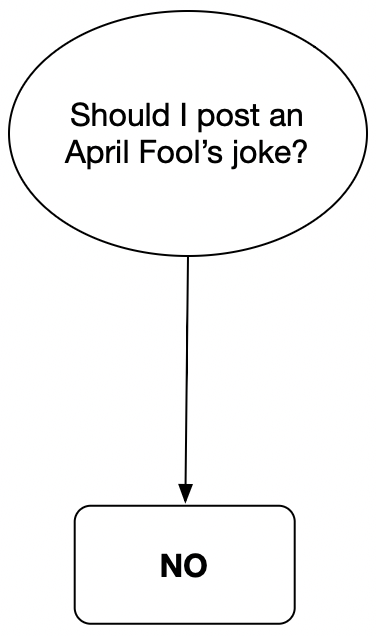
The Silicon Valley types, along with the tech bros, are showing us that they are actively trying to re-instate slavery, through robotics and Agentic AI. It is a demonstration of their disdain of anything that isn’t of their class and their need to be “served” anything and everything, at anytime. It exposes their belief in an imaginary hierarchy of society and the logical conclusion of the Ayn Rand philosophy of individualism put in practice. It is a violent assault on humanity. Welcome to the Digital Plantation.
In Martinique in the 19th Century, a statue was erected to celebrate the life of Napoleon Bonaparte’s wife, Joséphine de Beauharnais. She was born on the island into a rich slave-owning family. Slavery was not her fault. Of course, she had no choice into which family she was born. But she decided to do the unthinkable. She lobbied for, and obtained, the re-instatement of slavery on the island in 1802, when slavery was about to be castigated in the dark annals of history of the island. She, and her cohorts, couldn’t imagine a world without slaves doing anything and everything for her, at anytime. Of course, the fruits of that forced labour were purely for her and her families’ profit. At great pain and expense of the forcibly expatriated and enslaved Africans.
A crime against humanity warranted a statue in her name, apparently.
It was beheaded one day in 1991, and was left in this state for over a decade. Then, on another day, red paint, symbolising the blood of the people she personally enslaved, was smeared on it. Until its ultimate fate was decided, as it was toppled and damaged beyond repair, in what any decent human can only describe as a fitting final act for a symbol of entitlement, inhumanity, and violence.1
Like the old slave masters, the broligarchy will end at some point, possibly even violently. Statues or symbols of their power may be erected both physically and digitally in this time, that symbolise their power and privilege, and boast of their prowess. But they too will be toppled and destroyed.
Growing up around a museum
When I was very young, I have a couple of distinct memories that have since faded somewhat, but they are still there and appear when something triggers them. The trigger in this instance was my stumbling on the IndieWeb Carnival March 2026 : Museum Memories. It was going to about one of those memories recanting my chance relationship to one of the most interesting museums in the UK, the Science Museum in London. My elder brother was school friends with the son of the director of the Science Museum at that time, and a memory of our two families strawberry picking and then eating lunch at their house. It was where I first tasted Spaghetti Bolognaise. The memories came flooding back to me when I read the subject.1 But I think a more interesting story about my memories of a museum is to be told.
I grew up in the 70s on a modest housing estate in the West Midlands that was located not too far from what has been called the Birthplace of the Industrial Revolution. Throughout my early years, it was common to have it drilled into us that Ironbridge and the surrounding area was the most important site of industrialisation in the entire world.2 There are several sites, museums, and artefacts that testament to the history of the area that we could avoid nor miss. However, like most kids of a young age, I grew up with a complex mixture of pride, interest, and total ambivalence to the evidence that was within my field of view permanently. Sure, some of it was interesting, and it got us out of school on a number of occasions to benefit for some fresh air, but historical acts of smelting iron ore were not the kind of thing this young lad was interested in.
But from a very early age, I got to experience the entire museum complex, not as a visitor or patron, but as a result of other circumstances. Allow me to explain.
Before I entered infants school, my mother had struck up a friendly relationship with the potter at Blists Hill, part of the Ironbridge Gorge Museum, some time before its opening in 1973. She was a creative soul, with much place in her life for the enjoyment of expressing that creativity. We would often walk down to the museum, following the back roads, through woodland pathways built on old mining slag heaps, round the back of the posh people’s houses and down the hill to spend a few hours in the pottery. Probably a good fifteen-twenty minute walk. Once onsite, I was given a lot of freedom to roam around and look at the various shops and interests of the site, and then we’d go home for lunch. The site, it is a reproduction victorian village, with shops, banks, and other artefacts that faithfully recreate the era. It was fairly rudimentary in those days, having not long opened, but quickly developed into one of those rare but popular destinations where you get to not only see, but touch, smell and really feel the past.
Roy, the potter, was a very kind man. He’d known me before I could walk, and later as I was a little older, he let me run around the pottery as long as I didn’t go near the ovens! He took time to show me how everything worked, giving me lessons on spinning, glazing, and firing. It was fascinating because it was real. Physical. Tangible. It was the job, of course. Something he’d do for paying visitors, but I could tell he did it for the pure joy of being able to transfer his skill and knowledge. He is a skilled potter and had no trouble selling his creations. He still works as a potter to this day.
A few years later, I’d grown a little, and was now struggling in secondary education (for reasons), but had one thing that I could do well without constantly fighting against myself. Music became a central part of me and, most probably, a life-saver. That love for music started as a youngster, my mother would take me and my siblings to the “big school” on Saturday mornings to make bamboo recorders. Spending weeks cutting, filing, drilling and carefully placing a piece of gently cut cork to make a sound that was all of your doing was enchanting. Several weeks would then be spent attempting to tune the recorder, all while learning to play basic music. I learned about music at this stage, and it affected me profoundly. From a failed attempt to learn the violin, through the bamboo pipes, I eventually fell in love with an unassuming brass instrument, the B♭Cornet. I became a very good player for my age, and had a very good maitrise of three variations of the instrument. The Cornet, an E♭Soprano Cornet —which is much harder to play—, and a B♭Trumpet. I became one of the key players in the school band, sharing “principal” responsibilities for a number of years. The school band gained a notoriety, and we were often playing around the country on weekends, in a sponsorship with British Rail (back when it was a company for public good) in various towns and cities, including the local museum sites in Ironbridge. I got to see the museum once again for free, but in very different circumstances. The various sites of the museum hold a special place in my memories of a time that things were not always plain sailing.
I now live many millions of metres from the museum, but I do think about how much the museum has been present at various stages of my life.
I mean, how could we have known that using glasses with cameras in them to record everything you see, actually recorded everything you saw and then uploaded some of it to be seen by other humans, that saw everything you saw?
From the company that has the most disgustingly poor record on privacy, possibly in history —“dumb fucks”—, it was just impossible to tell that they would do this.
How many more scandals is it going to take to hold Mark Zuckerberg responsible?
Oh, and by the way, you should absolutely challenge anyone wearing those godawful things around you. If you happen to punch them in the face, that’s your decision, but I won’t shed a tear.
You built the absolute best app in its field.1 The most useful and helpful to use with a genuinely delightful interface, all for a reasonable price that fitted so perfectly into the category that you practically single-handedly owned the space.
True, it was a relatively small market, but you were making a healthy profit and were highly respected by the large group of users you served.2 So much so, users would volunteer help and advice, knowing that their contributions would be taken seriously and possibly even further developed and integrated into the app for the benefit of all.
Given that your app is a security app, this invaluable feedback helped ensure your app didn’t falter badly like others in the same category, the category you essentially created.
But you couldn’t leave it there, could you?
The lure of MOAR just kept eating away in your mind. Eating like a cancer, growing unseen and undetected until it made itself inextricably embedded.
But unlike the classical treatment of a cancer, and contrary to all knowledge on treating cancers, you decided to embrace it. And embrace it you did. You went off and got that big fat cheque of VC money to expand into “new markets” and into new profits.
For a while, it looked like you had managed the change, and that the mission was the same. The expansion into that new market felt very much like the first foray into bringing the goodness to those on the other platform. I even recommended it to numerous people using the dark side’s platform. But now we know, it was only the cancer directing you to give it more food for growth. And it didn’t take long for the cancer to start attacking the more sane and reasonable parts of the organisation. It always does. That’s what a cancer is. You can’t embrace it, for it will embrace you. It will consume you. It always does. And there is nothing you can do about it once you have left it embed itself so deeply. I know what I’m talking about. I have lived through what a cancer is and what it does. That is why I recognise it, in all its forms.
Then you sent us all an email, explaining that you were “upgrading” your prices (our costs) by 25%. Justifying the move with the fact that you hadn’t increased prices in a long time. Adding that, you were adding functionalities that no one asked for. Functionalities that could potentially result in substantial in cost increases for you.
Firstly, who wrote and signed off on using the word “upgrade” in this context? I would suggest that you purchase a dictionary for them to use, and then systematically double-check any public communications they may make in the near future. It smells (badly) of a press release copiloted by a stochastic parrot. Should that be the case, something we’ll probably never know, the fact that you treated the most important part of your business; hint: your customers with this disdain, suggests that going forward, you will treat us at least as badly, but more likely worse. Let alone the disregard for our data you may have in the future.
Secondly, this was your strategy. Not ours. You decided to use the injection of VC money to stabilise prices, not us. Instead of incrementally pricing as functionality was introduced, or as inflation required. Now it’s our fault? You didn’t even offer an option for those that only need basic functionality to stay on a plan similar to the current one. It would have been less than ideal, but not as egregious as this agressive threat expressed in that rueful email. No. You went for the nuclear option and told us all that you had us by the balls and that the ransom starts now.
So let me be clear, and I want to make this as unambiguous as possible. Go fuck yourselves!
I will be “upgrading” my use of your application, rendering it superflus to my needs.
For the record, my short interaction with the support team, has clarified that you simply do not seem to understand the problem.
So long. And thanks for all the fish.
I mentioned that I’d been using the new Journal.app on the Mac for a while and from the beta cycle of macOS Tahoe. That’s changed (again!).
Ultimately, the app felt like it was getting in the way of writing my thoughts down. It was also geared to a certain type of performative journaling that doesn’t sit right with me. That type of journaling, with scrapbook properties, places, and photos, etc., is all well and good if it works for you. And who am I to judge? It just doesn’t work for me. In fact, it’s quite off-putting for me. I’m more of the start-with-blank-page and vomit-straight-from-the-brain type of journaliser. So I went back to plain markdown files and set up a couple of text shortcuts to automate things like the date and time.
I’m back here on Ulysses, and it is tweaked just they way I like it to help me with my writing, not against it.
You don’t need to pay for a fancy app that is little more than a glorified filing structure, or use a built-in app that is essentially an entrapment tool. Having your text as plain text files gives you the flexibility to move as often as you like between applications and environments that work for you.
Ad-blocking went from being an ideological choice, to a personal secrecy-preserving decision, to a brain-jacking-casino blocker, to helping prevent the destruction of democracy itself, to now, being an absolute imperative for cybersecurity reasons.1
Online advertising and the associated adtech companies are a cancer and they need to be dealt with.
Do not feel any shame blocking ads anywhere and everywhere you can. Tell the advertisers to use non-intrusive ad systems or fuck off. To the advertisers: you know you don’t have to use their rigged racket.2
Bonus, you get to take part in the downfall of the odious creeps like Zuckerberg.
It would be funny, if it wasn’t so grotesque, deceitful and insincere. Tell us Tim, who are you really standing with?
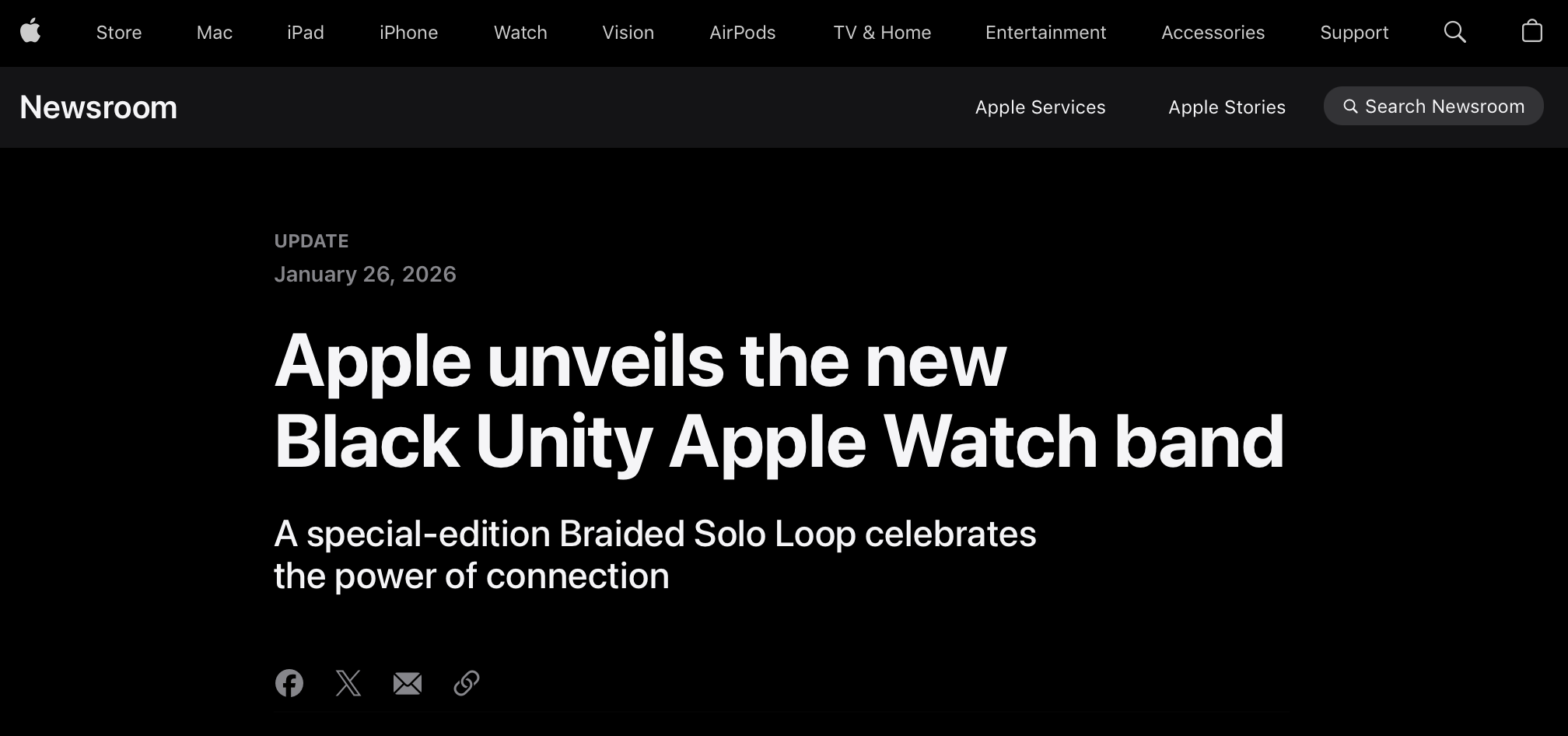
Source: [www.apple.com/newsroom/…
You used to pay Apple, happily, and their devices and applications worked for you. Now you pay Apple for something substandard that sometimes actively work against you. And they still want more money from you.
A couple of examples of this, are the iTunes app (now Music) and Aperture.
Apple Music app, especially on the Mac, is not fit for purpose. It is buggy, temperamental, and actively hostile to a good user experience.
Aperture is probably the definitive example of a company making things worse over time. It was the best photo management, editing and publishing app on the planet. It ran rings around Adobe’s bloated Lightroom. I used to take photos of local trail races, around 1200 to 1500 per race then, with Aperture, import, triage, edit, and publish them to Flickr in a matter of a couple of hours. When Apple killed Aperture, I resisted but was eventually forced (by Apple no less) to migrate to Lightroom. Even after months of use, user training, and manipulating it in anger, it was much slower to do anything on Lightroom. Roughly twice as slow for my workflow.
For me, Aperture is notable as the first sign of Apple’s decline in quality and, more importantly, producing tools that work for you. Today, you finance Apple, and that’s it! Don’t expect anything back, you ungrateful bastards!
I’ve been using the Journal app on macOS since it was in beta, as a test to see if it could replace the text documents I had been using up until then. I’d migrated from Day One a couple of years ago, having become less than enthusiastic about its owners once it was sold on.
I migrated everything to Ulysses, and made each entry an .md file and stored them on a synced and encrypted drive so I could always find them again if needs be and have peace of mind about security. There are very private thoughts, remember.
When the Journal app came along, I wanted to give it a try to see if it would work for me. The type of journaling I do is basic and is easily suited to plain text files. But I wanted something that had a few bells and whistles to help get me into the mindset to use it, and using the same editor I use for long-form writing was fine, but it didn’t really gel. I checked that I could export all the entries, if needs be, because that was a deal-breaker if it wasn’t possible. And I started using it.
So far, I’m pretty happy with it, but it has its idiosyncrasies. For example, when I start a new entry, text input is not always ready to accept typed words. I click in and out of the window a couple of times, and then I can write. It’s a bit shoddy for a company like Apple, but it’s hardly the end of the universe either.
However, the biggest issue for me is that there are no controls to adjust the size of the text displayed. Being able to scale text would make such an improvement to the app, particularly if, like me, you primarily use a 27” monitor.
So that’s my request of Apple. Please include text sizing options to help make it more inclusive for users.
Like a lot of people, I have had an interest in photography for many years. I had some projects that spanned over six or seven years and I’m pretty happy with some of the outcomes of those photos. I’m trying to archive them better for posterity and future use. I briefly mentioned on my Now page.
A couple of weeks ago, I had a catastrophic failure of my last remaining Nikon DSLR camera —with a little luck should be repaired soon— which has provoked me to look into replacing it. I’m moving off DSLRs to Mirrorless cameras. There’s probably a couple of camera brands I would like, Nikon, Sony and Panasonic, but I have a strong pull for Fuji cameras.
Diving into this rabbit hole, I came across some videos from a photographer and professional colourist in the film industry. GxAce.
The production quality of these mini films is just stunning. The look, the ideas and the attention to detail to the history of the things he presents is just so interesting. You may not like the William Gibson-esque nature of the presentation, that’s fine, but the information provided and the way the stories are told is quite something. Highly recommended.
PS. If I had a tenth of his talent for composition and production, I’d be overjoyed.
A few days ago, I was a guest on a podcast here in the Caribbean to talk about some difficult topics. Over on my main blog, I’ll probably post about it soon, but I wanted to mention how I feel doing these things.
I read a lot, which contributes to a gathering of a lot of research on several topics that may or may not be loosely related to the work I do. I find it broadens my mind and having other reading helps me write and contribute to the projects I get involved. It’s a labour of love and isn’t always monetised, but to hell with it. I don’t feel the need for everything to be monetised.
Recording discussions with other people is so rewarding, and it adds to the information that I have researched and learned through papers, sites, and videos as sources. Being put on the spot to discuss topics that can be a little tricky, helps me think deeply about what I’ve learned and what it all means. Writing takes that further, but I wouldn’t give up the opportunity for discussion for anything.
I used to feel very self-conscious of my voice, but now I’m starting to get used to it, and I’m started to forgive my vocal ticks (I say, so on and so forth, too much) and savour the discussions that are recorded and published.
Recording a discussion and editing it many times really helps break down that distaste of one’s voice. At some point, I’ll get to like blogging and not be so self-conscious.
I updated my Now page to try to keep track of things I do over the months. I’m sure that’s not the main purpose of a Now page, but as I keep each version, it’ll act as a record over time.
It serves as a reminder and a motivator to keep plugging away, too.
When people finally organise and take over the repugnant regimes of the right in the future, Social Media will try to take credit for it, despite being the main enablers of the fall into fascism.
Don’t let them get away with it.
Their schizophrenic allegiances to you, the user, are actually an unwavering deference to money.
Don’t be fooled.
Last year, I tried to be a bit more intentional with reading. In some respects, I was trying to get back to a time when I would always have a book on me and would read it throughout the day, on public transport, in the office, or whilst waiting for something. It is an activity that I have lost and missed, and, I think, to many other people since the attention capture of Social Media.
I largely achieved that goal, and it has been good for the soul, but I’m sure that I could have done better. I’m largely off anything social, although I read a few posts on —non-nazi bar— forums and Mastodon. But it got me thinking about the types of reading I do and how I can fine tune the intentionality for (hopefully) better outcomes.
If I had to categorise the types of reading I do, it tends to fall into one or more of the following bins:
For the first type, I am starting to limit myself to a maximum of an hour over a full twenty-four, to catch up on posts on Mastodon and news-related sites with NetNewsWire’s fine RSS reader. This is high sugar content that satiates a need in the instant, but quickly dissipates from my brain, leaving room for other things. It used to be MOAR of the same, but this is a habit that I am slowly kicking. But damn, the world going to hell in a handbasket is really not helping!
For learning, this is highly intentional reading, where I will need to set aside time to read, re-read and digest the information. Within this category, there are probably a couple of other subtypes. For example, for training materials, I tend to read quickly, take a couple of notes to get the gist, re-read then take the test / exam. This serves me well, and I generally get high grades. For other writing that is ostensibly something I’d like to “learn” something from, I have a tendency to read it, think I’ll remember it, and of course don’t. Typically, this is on personal blogs of writers, or others sharing on a topic that interests me. It’s not formal training, or journalism, but it is nonetheless interesting and helpful to developing one’s particular interests. The change this year —if I can achieve it— is to treat it more like education and take notes. Even if these notes are not extensive, structured and written with poor handwriting skills. They might never be seen again, but that doesn’t matter because the exercise of effort to write them in the first place is likely to have a positive effect on retention and learning capacity.
For novels, I want to get back to the wonder I felt when reading books when I was younger. I’ve never been one to take reading notes and write my personal summaries. Whilst I aspire to that, I don’t think I’m wired that way, so I’ve decided not to fight against it. I’m going to read them. Enjoy them. Finish them. And then move on to the next book. This doesn’t preclude me from taking an interesting note at some point in the future, but I’m not going to ‘intentionally’ start reading a book with the purpose of producing reams of notes. And, to be honest, I have a fairly unique relationship to novels, in that I cannot re-read them in the future, as I already know the story and what is about to happen that it kills all the joy for me. I can count on one hand the number of novels I’ve re-read over my life. I just can’t do it.
I’ll see how I get on this year and in trying to keep myself on track, I’ll return to this post every now and again.
2025, Good fsck-ing riddance!
Hello 2026. A lot of work to be done.
If you give over agency to intermediaries and automated arbitration systems, you effectively abdicate agency and control.
You are then ripe for exploitation, and exploitation will happen eventually. The temptation for those intermediaries are too strong to ignore, and number must go up.
The incentives change the second you no longer have control over what you search, see, check, purchase, and experience in life. You have become a digital slave.
You can take back control (mostly), and it is easier than you think. Start by blocking ads like they are cancerous cells invading your body. A good proportion of them are fraudulent anyway. If that makes you feel a little guilty, then pay the people whose stuff you consume directly. Most of them have a method.
“you should not rely on …”
Services like ChatGPT generate responses by reading a user’s request and, in response, predicting the words most likely to appear next. In some cases, the words most likely to appear next may not be the most factually accurate. For this reason, you should not rely on the factual accuracy of output from our models.
Source: https://openai.com/policies/eu-privacy-policy
It’s right there in the policy documents.
Let’s just call this what it is …
From RestOfWorld, The hidden labor that makes AI work:
This industry has been called by many names: “crowdwork,” “data labor,” or “ghost work” (as the labor often goes unattended and unseen by consumers in the West). But this work is very visible for those who perform it. Jobs in which low-paid workers filter out, correct, or label text, images, videos, and sounds have been around for nearly as long as AI and the current era of deep learning methods has been. It’s not an exaggeration to say that we wouldn’t have the current wave of “AI” if it weren’t for the availability of on-demand laborers.
… Modern slavery.
You too can read the sycophantic babbling of a rotten politician (nor a good one), as he brown-noses Zuckerberg the Immoral.
Why live in reality when you can convince yourself the world out there (the one you don’t live in) is not real?
Makes me sick.